In the evolving world of smart homes, where lights adjust automatically and thermostats learn your preferences, the allure of convenience of...
In the evolving world of smart homes, where lights adjust automatically and thermostats learn your preferences, the allure of convenience often overshadows potential vulnerabilities. Yet, as more devices connect to our networks, the smart home lifestyle brings with it significant cybersecurity risks. Embracing wired Ethernet connections to routers can offer a robust layer of protection, reducing exposure to wireless threats while maintaining the seamless integration we expect from modern living. This approach isn't about rejecting wireless tech entirely but about making informed trade-offs that prioritize privacy, trust, and safety in daily life.
Understanding the Escalating Cyber Risks in Smart Homes
Smart homes are increasingly under siege from cyber threats, with IoT devices serving as prime targets for attackers. Early 2026 data indicates that malicious IoT hacking attempts average over 820,000 per day, marking a 46% increase from the previous year.
Consider the average connected household: with around 22 IoT devices, it faces nearly 29 cybersecurity attacks every 24 hours, according to a 2025 report from NETGEAR and Bitdefender.

Regulatory bodies emphasize these dangers. The U.S. National Institute of Standards and Technology (NIST) outlines in its Cybersecurity for IoT Program that unsecured devices can facilitate broader network intrusions, recommending baseline security controls like secure boot processes. (NIST IoT Cybersecurity) Similarly, the Cybersecurity and Infrastructure Security Agency (CISA) advises segmenting IoT networks to limit damage from breaches, citing examples where weak passwords enabled ransomware entry. (CISA IoT Security)
Hypothetical Scenario: A Wireless Smart Home Breach
Imagine a family in a suburban home relying entirely on wireless connections for their smart locks, cameras, and thermostat. One evening, an attacker exploits a vulnerability in the wireless router -perhaps through a man-in-the-middle attack intercepting unencrypted signals. The intruder gains access to the camera feeds, monitors the family's routines, and even unlocks the front door remotely. While this scenario is hypothetical, it illustrates how wireless dependencies can amplify risks, potentially leading to physical safety threats alongside data loss. In contrast, a wired setup might have isolated critical devices, preventing such widespread compromise.
The Security Trade-Offs: Wired vs. Wireless in Daily Life
Wired Ethernet connections provide a physical barrier that's harder for remote hackers to penetrate, unlike wireless signals that can be intercepted from afar. This setup enhances trust by minimizing over-the-air vulnerabilities, such as eavesdropping on data transmissions. For example, the Open Web Application Security Project (OWASP) highlights in its IoT Security Guidance that wired networks reduce the risk of session hijacking, a common exploit in wireless environments. (OWASP IoT Project)
However, the smart home lifestyle involves balancing these benefits against everyday practicality. Wired systems offer stable, low-latency connections ideal for security cameras, where even brief disruptions could miss critical events. Yet, they require upfront planning to keep cables tidy, avoiding clutter that might deter users from maintaining their networks properly.
| Aspect | Wired Networks | Wireless Networks |
|---|---|---|
| Security | Lower interception risk; physical access needed for tampering | Higher vulnerability to signal jamming or unauthorized access |
| Reliability | Consistent performance without interference; e.g., supports 1 Gbps speeds reliably | Prone to signal degradation from walls or devices |
| Privacy Implication | Reduces data broadcast, limiting exposure | Broadcasts data, potentially leaking metadata |
| Safety Trade-Off | Enhances control over critical systems like alarms | Convenient but risks outages during power surges |
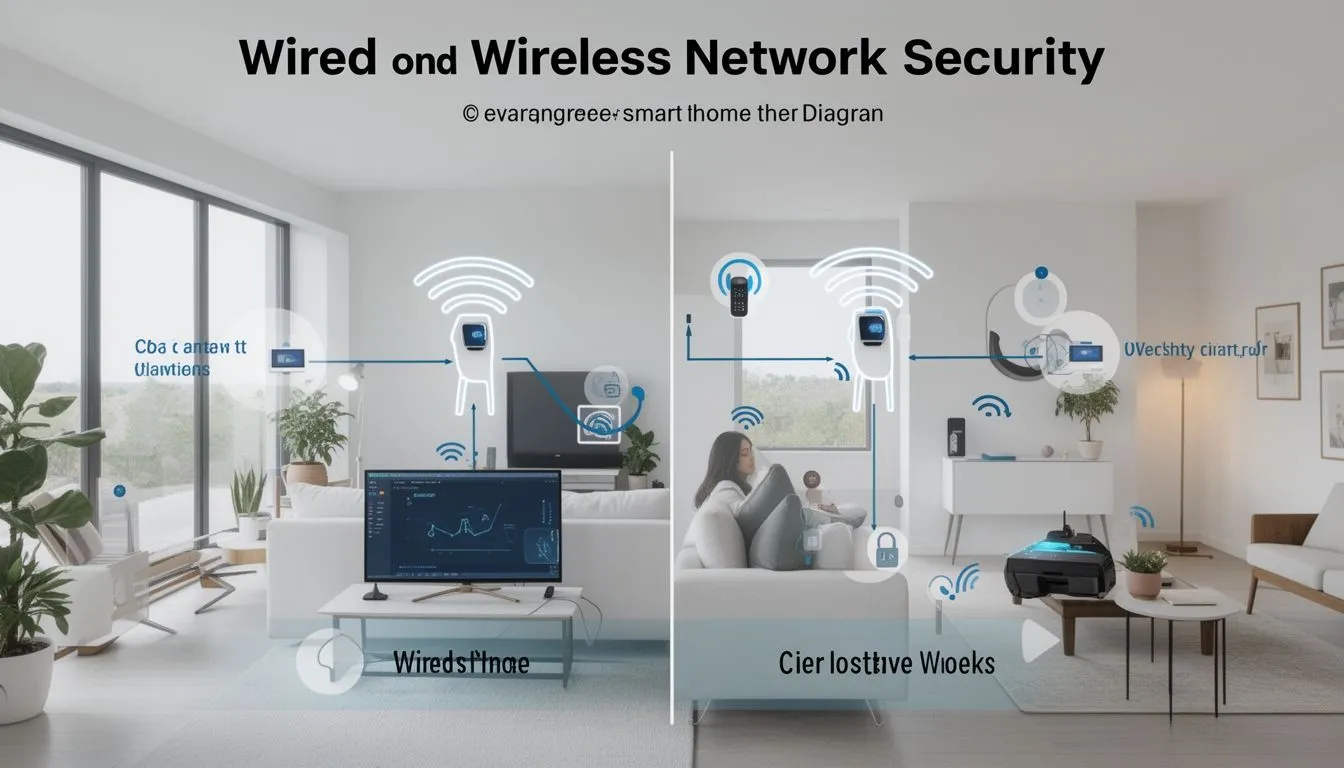
Recent discussions on platforms like X underscore this relevance. For instance, a March 2026 post from STiR Communications highlighted expert insights on securing video doorbells, emphasizing the need for robust network setups in smart homes.
When to Embrace Wired Setups and When to Proceed with Caution
Incorporate wired Ethernet when privacy is paramount, such as in homes with sensitive financial data or remote work setups. If your smart home includes devices handling crypto transactions or personal health metrics, wiring the router directly can isolate traffic, adhering to NIST's recommendation for network segmentation. This is particularly useful in larger properties where wireless coverage falters, ensuring consistent security monitoring.
Avoid wired installations in scenarios where mobility trumps security, like compact apartments with few devices. Here, the effort to run cables might outweigh benefits, especially if devices like portable speakers rely on wireless freedom. The trade-off? Potential exposure to attacks like those noted in Bitdefender's report, where wireless routers were weaponized in DDoS botnets. Always weigh the real-world implication: a tidy wired setup might prevent a breach costing thousands in recovery, but overkill in low-risk environments could stifle the flexible lifestyle many seek.
Maintaining Trust Through Tidy and Secure Installations
Tidiness in Ethernet cabling isn't just aesthetic - it's a practical control that aids long-term security. Bundled and labeled cables, for instance, simplify troubleshooting during firmware updates, which CISA notes are crucial for patching vulnerabilities. In one documented case from OWASP, disorganized wiring led to overlooked device exposures, resulting in data leaks. By keeping connections organized, users foster a sense of control, reinforcing trust in their smart home ecosystem.
Yet, the shift to wired elements demands acknowledging drawbacks. Installation might disrupt daily routines initially, and in rental properties, permanent changes could be impractical. Still, for those committed to a secure smart home lifestyle, the payoff in reduced cyber risks is tangible.
Navigating the Future of Smart Home Safety
As smart homes integrate more deeply into our lives, the choice between wired and wireless becomes a pivotal decision on privacy and safety. Wired Ethernet to routers offers a grounded defense against the intangible threats of the digital age, but it's not a panacea. Combining it with strong passwords, regular updates, and vigilant monitoring creates a holistic approach.

Ultimately, the smart home lifestyle thrives on informed choices. By understanding these trade-offs, individuals can build environments that not only simplify life but also safeguard what matters most. In a world where cyber threats evolve rapidly evidenced by the 124% surge in IoT malware in 2025


COMMENTS